block the path
Block the Path bots: choose a difficulty and practise without an account
Meet Block the Path’s seven bot levels, learn which three are in Quick Play, and build a practical training routine for movement, walls and endgames.
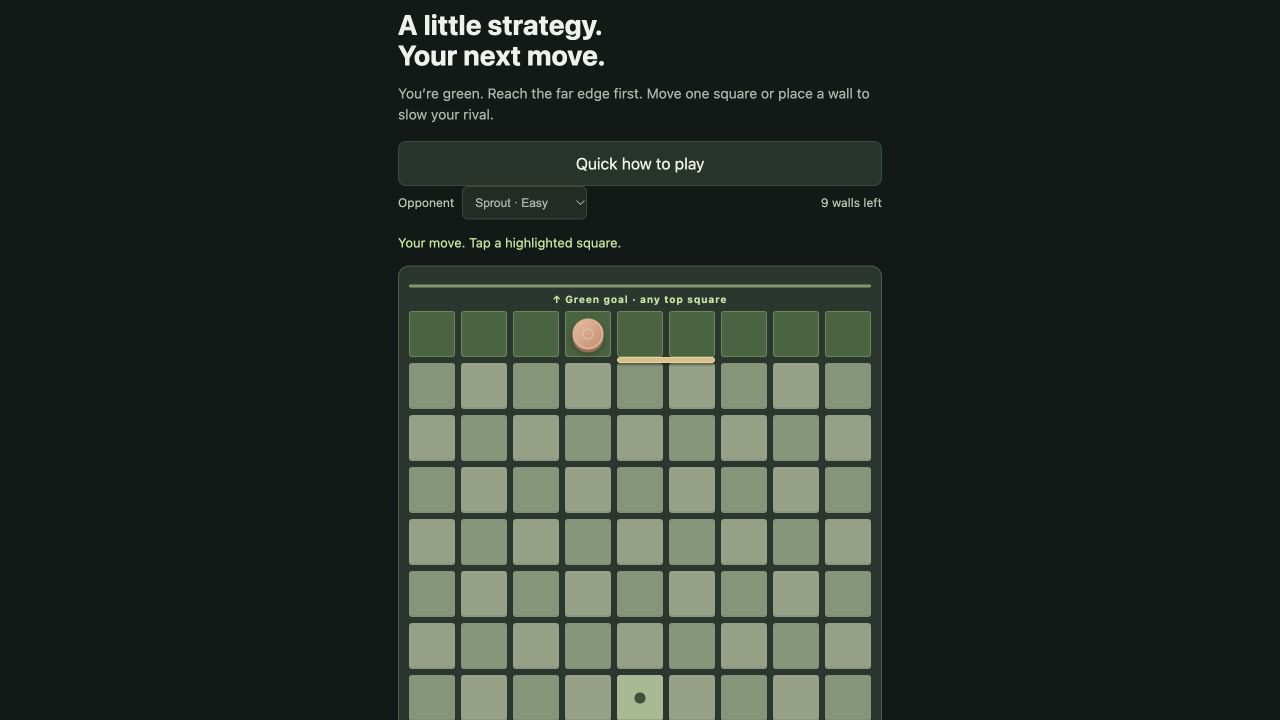
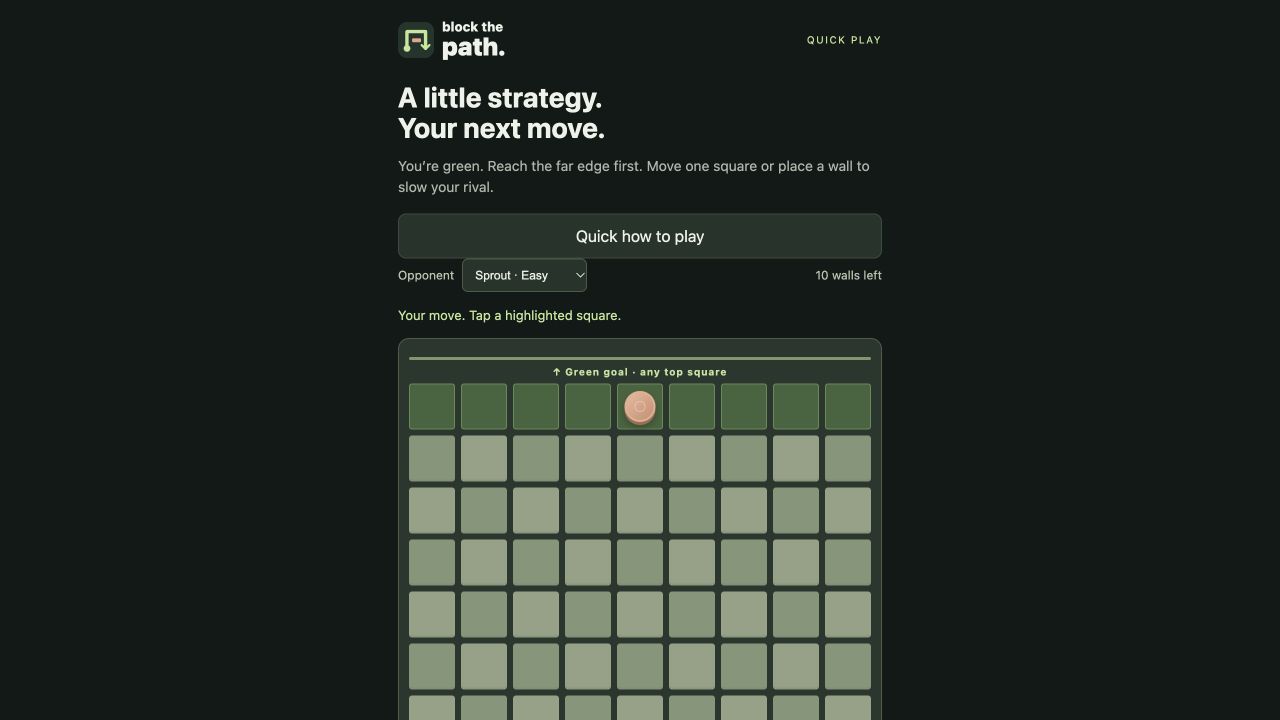
Start with Sprout to learn Block the Path’s controls, then try Builder for wall decisions and Architect for a tougher practice game. Quick Play includes these three opponents. The full club offers seven bot levels, from Sprout to Oracle.
Which bots can you play?
| Bot | Practice focus |
|---|---|
| Sprout | Learn movement and the interface with a forgiving opponent. |
| Wanderer | Practise a straightforward race. |
| Scout | Notice occasional walls and detours. |
| Builder | Compare movement with useful wall placements. |
| Architect | Protect your route against more demanding wall choices. |
| Tactician | Think about the opponent’s reply. |
| Oracle | Challenge your plans against the strongest listed bot. |
These labels describe the game’s difficulty settings. They are not verified human Elo ratings and should not be compared directly with a player’s online rating.
Quick Play versus the full club
Quick Play offers Sprout, Builder and Architect in a focused interface. Select the opponent before your first move. The selector locks during an active game; start a new game to change it. The full club has the larger seven-bot menu alongside lessons and puzzles.
You do not need an account to practise against a bot. Bot decisions run locally in your browser after the game resources load. The bundled App Clip’s practice mode can run offline. Live friend matches and account services need an internet connection.
Use a small training routine
- Movement game: play Sprout and focus on legal moves and the opposite-edge objective. Notice when a jump becomes available.
- Wall game: play Builder and explain the expected detour before every placement.
- Review game: try Architect and identify the first moment your route became longer than expected.
Repeat a level while you are still making control mistakes. Move up when you can explain your decisions, not just because you won one match. A lucky result is less useful than recognising why a route worked.
Take practice into a friend match
Bots help you learn the mechanics, but a human opponent may choose a surprising route or save walls differently. After a few practice games, invite a friend and choose a clock that gives you time to think.
If you often run out of walls, work through the wall strategy drill. If you lose track of legal jumps, return to the jumping rules. Practising one weakness at a time makes each game easier to learn from.