block the path
How to play Block the Path: rules, moves and walls
Learn Block the Path’s 9×9 board, pawn movement, jumping rules and legal wall placement. Follow a first-turn example, then play a free practice game.
Block the Path is a two-player strategy game on a 9×9 board. Reach any square on the opposite edge before your opponent. On each turn, either move your pawn or place one wall. Each player starts with ten walls, and both players must always have a route to their goal.
The board and the objective
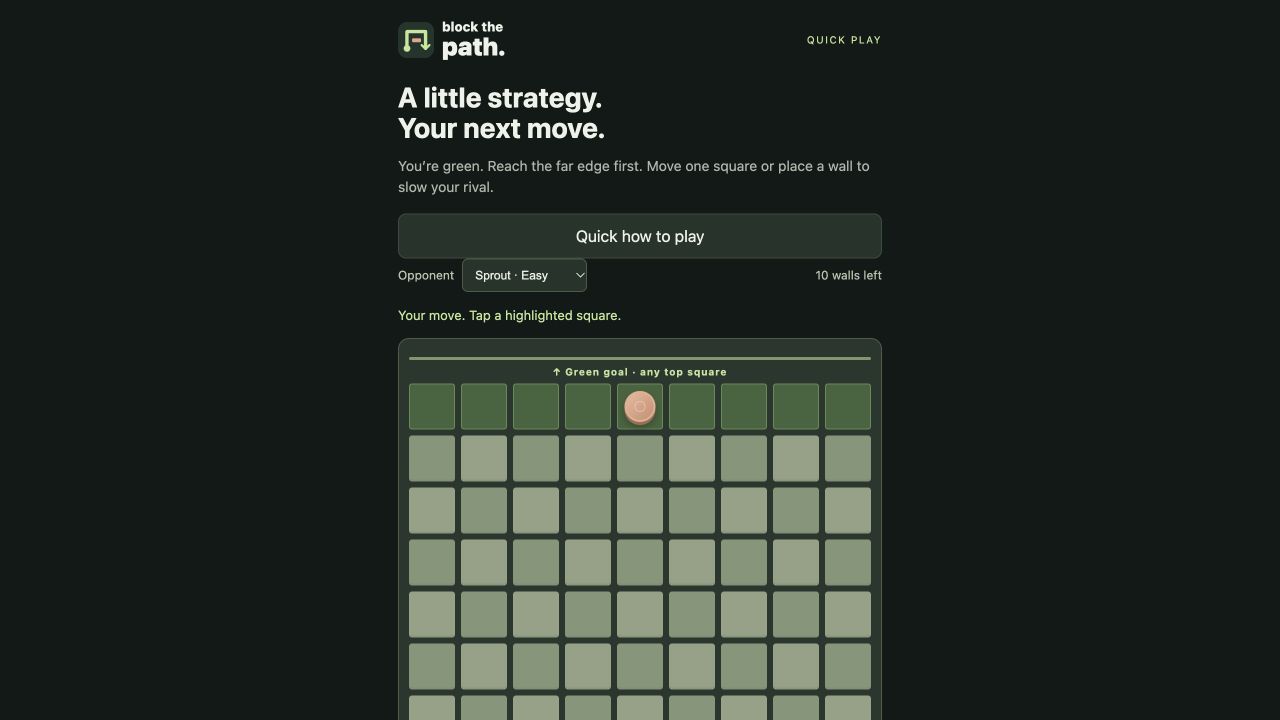
Green starts at the bottom centre, e1, and aims for the top row. Coral starts at the top centre, e9, and aims for the bottom row. You win by reaching any square on that opposite edge, not just the centre square. There are no captures and no dice.
The board changes as walls appear. A route that looked direct two turns ago may become a detour. Before choosing an action, look at both pawns, the open gaps and each player’s remaining walls.
What can you do on a turn?
Choose exactly one action:
- Move: move one square horizontally or vertically through an open gap. Highlighted dots show legal destinations.
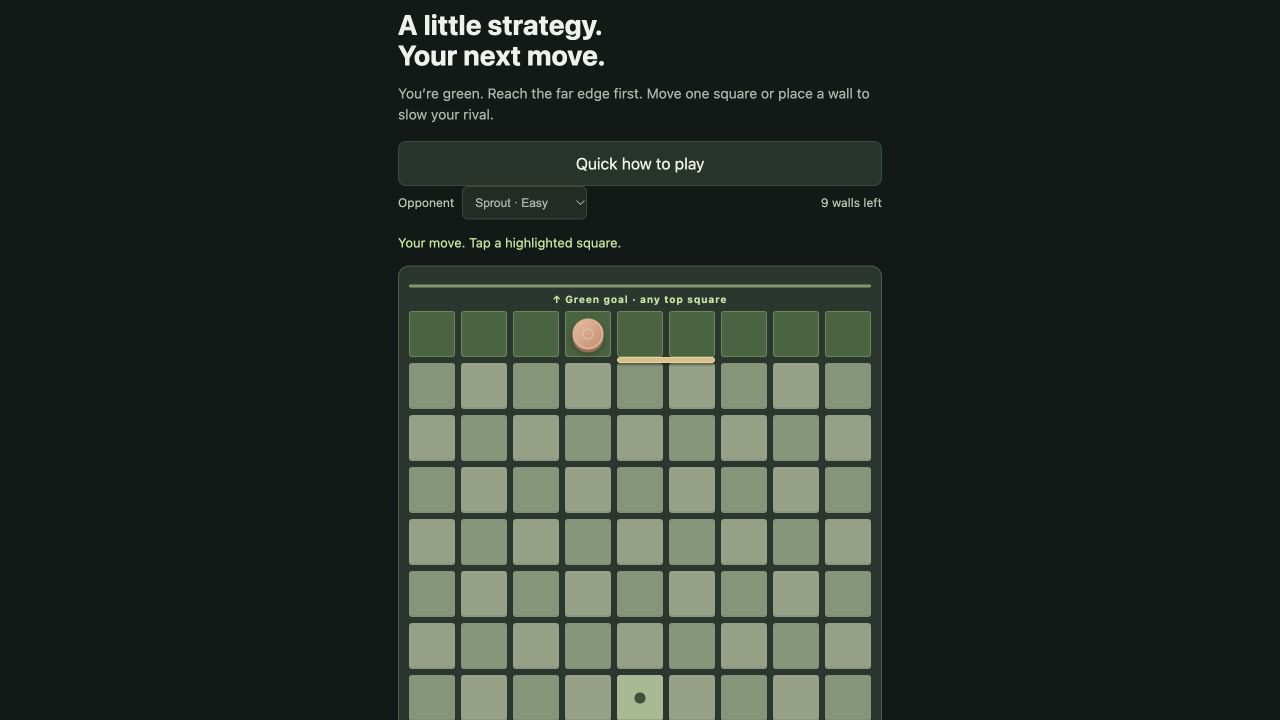
- Place a wall: choose horizontal or vertical orientation, then select a gap. A wall spans two adjacent square edges and uses one of your ten walls.
You cannot move and place a wall on the same turn. A placed wall affects both players and remains on the board.
For your first move, tap e2: the highlighted square directly ahead of green. Your rival then takes a turn. Once it is your turn again, compare advancing with placing a useful wall.
How jumping and diagonal movement work
If your rival is on an adjacent square with no wall between you, you can jump straight over their pawn when the landing square is reachable. For example, green on e4 can jump over coral on e5 to e6 if the gaps are open.
If a wall or the board edge prevents the straight jump, you may instead move around the opponent to an open side square. This is the special situation that allows a diagonal destination. Ordinary diagonal moves are not allowed. Follow the highlighted destinations if you are unsure.
Which walls are legal?
Walls cannot overlap, cross at their centres, or remove either player’s last path to the opposite edge. You may make a route longer, but you cannot trap a pawn completely. A wall can also block your own shortest route, so check both sides before placing it.
The game rejects an illegal placement. Read the message and try a different gap or orientation. Our wall-placement strategy guide explains when a legal wall is worth spending a turn.
Play your first practice game
Open Quick Play and start with Sprout. No account is needed for this bot match. Try a forward move, one horizontal wall and one vertical wall. Watch which highlighted moves change after each wall.
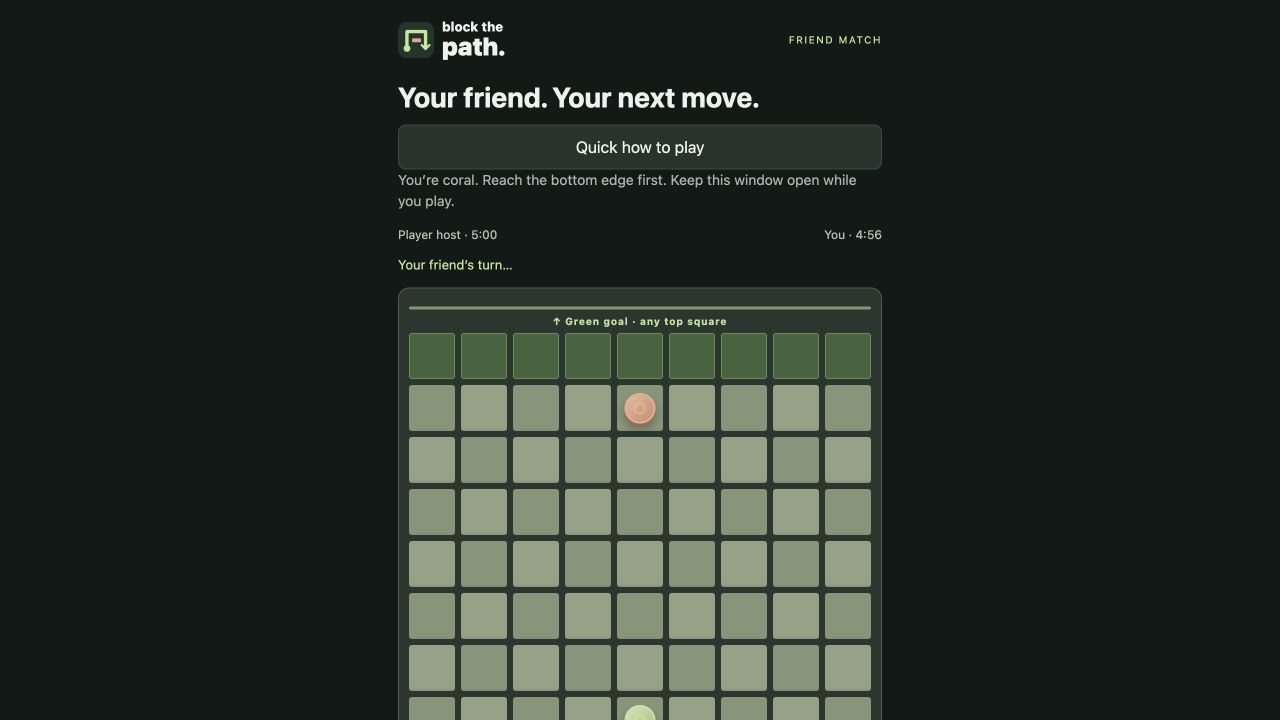
When you are comfortable with the controls, invite a friend to an online match. Practice games are untimed; online games use a selected clock.